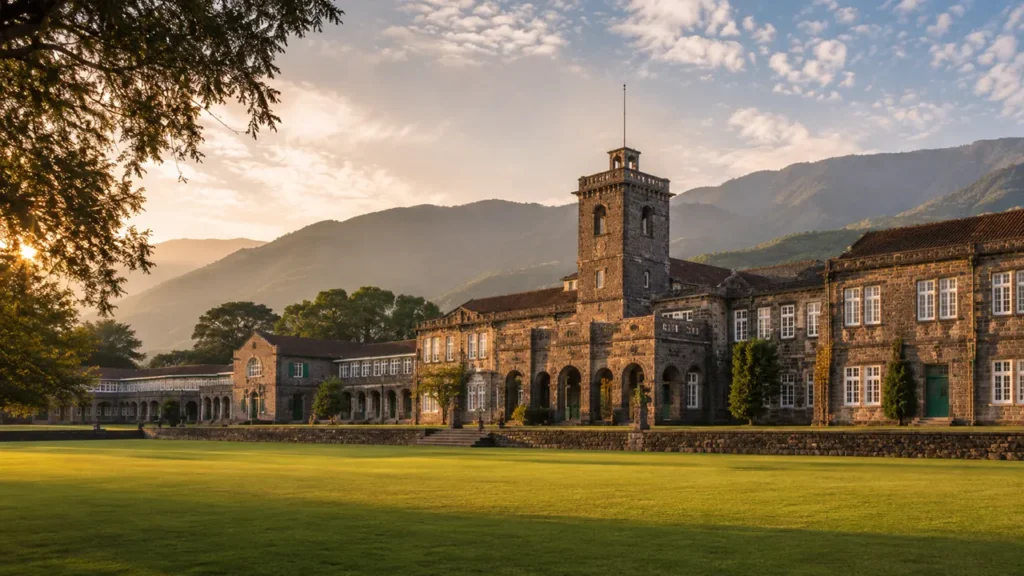
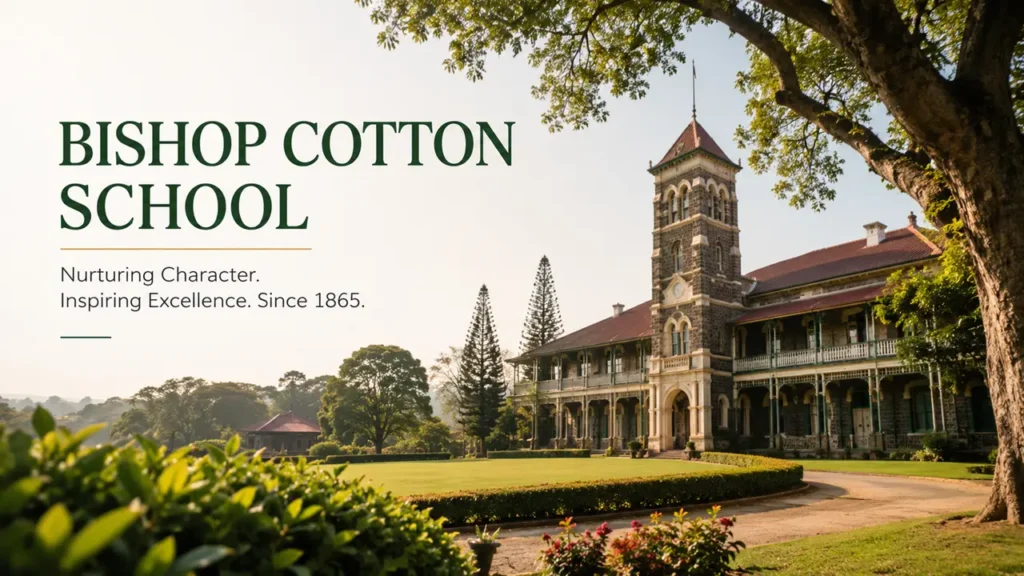
Bishop Cotton School, Shimla is one of the oldest and most respected boarding schools in India. It sits in the quiet hills of Himachal Pradesh and has been teaching young boys for more than one hundred and sixty years. If you are a parent looking for a boarding school with a strong history, good discipline, and a focus on building character, this school is one name that will come up again and again in conversations among parents searching for the right place for their son.
This school is often mentioned alongside a small group of well known heritage boarding schools in India, schools that were set up during British times and have continued to operate successfully for well over a century. What makes Bishop Cotton School special is not just its age, but how it has managed to hold on to its core values while also updating its teaching methods, technology, and facilities to keep pace with changing times.
In this blog, we will look at the school’s history, its academic system, its facilities, the admission process, fees, and much more, so that you have a clear and honest picture before you make any decision. Choosing a boarding school is never a small decision, so we have tried to cover as many practical details as possible in simple language.
A Quick Look at the History of Bishop Cotton School
Bishop Cotton School was started in the year 1859. It was founded by Bishop George Edward Lynch Cotton, who was the Bishop of Calcutta at that time. He had studied at Westminster School in England and later at Cambridge University, so he understood what made a good school. Before moving to India, he had also taught at Rugby School in England under a well-known teacher named Thomas Arnold, who is often credited as one of the people who shaped the modern idea of a public school. This early training gave Bishop Cotton clear ideas about discipline, character, and learning, which he later brought to India.
Bishop Cotton wanted to build a school in India that would give children, especially those living far from home or in remote hill stations, a safe and proper place to study, grow, and build strong values. At that time, many British and Anglo-Indian families living in India did not have easy access to good schools close to home, so a boarding school in the cool hills of Shimla made a lot of sense, both for health reasons and for education.
Money for the school was collected from churches across the region, and the funds were first used to set up a small school at Jutogh, near Shimla. Classes for students actually began a little later, in March 1863, when the first student, a boy named Frederick Naylor, joined the school. The land at Jutogh was not large enough for the school’s future plans, so Bishop Cotton personally visited several sites around Shimla to find a better location.
After looking at around ten different sites, a larger and more suitable piece of land was finally chosen at Knollswood, which still remains the school’s home today. This land belonged to the Rajah of Keonthal, and after some negotiation, with help from the Viceroy of India, the school was able to acquire it. The foundation stone of the present buildings was laid in 1866 by the Viceroy at that time, and by 1868 the school had moved fully to this new site, where it has stood ever since.
The early years of the school were not always easy. Building a new institution in the hills, with limited transport and resources in the nineteenth century, took a lot of patience and effort from the early teachers and administrators. Slowly, though, the school built a reputation for strong discipline and good results, and more families began sending their sons there.
Over the years, the school faced some hard times too. In 1905, a big fire damaged a large part of the campus, destroying buildings and records. This could have been the end for a smaller institution, but many generous people stepped forward to help rebuild it, and the school not only recovered but became stronger than before. To remember their kindness, the school named its boarding houses after some of these donors, a tradition that continues to this day, with each house carrying the story of the person it is named after.
This period after the fire is also connected to one more important part of the school’s identity. Bishop Cotton School was the first school in India to start the house system, where students are grouped into different houses for sports, discipline, and daily life, somewhat like separate smaller communities within the larger school. This model has since been copied by countless schools all over the country, which shows just how much influence Bishop Cotton School has had on Indian education as a whole.
Bishop Cotton School also holds the honour of being among the first schools in Asia, and the very first public school in India, to begin this kind of structured, value-based boarding education. The Old Cottonians Association, the school’s alumni body, was formed in 1910, showing that even at that early stage, former students wanted to stay connected to their school and to each other. Today, the school has crossed more than one and a half centuries of service to education, having celebrated one hundred and fifty years in 2009, and it continues to attract students from India and abroad who want to be part of this long and proud tradition.
Board and Curriculum
Bishop Cotton School follows the CISCE board, which stands for the Council for the Indian School Certificate Examinations. This means students appear for the ICSE exam in Class 10 and the ISC exam in Class 12. In Class 12, students can choose between Science, Commerce, and Humanities, depending on their interest and career goals.
Apart from CISCE, the school has also added the Cambridge IGCSE curriculum from Class 9 onwards as an option. This gives students a chance to study under an internationally recognised system as well, which can be helpful for those who may want to study abroad later. Having two board options gives families more flexibility and opens up more paths for higher studies.
Class sizes at Bishop Cotton School are kept small, generally around twenty to thirty students per section. This helps teachers give more individual attention to each boy. The school also runs extra tutorial sessions and remedial classes for students who need more support in certain subjects.
Type of School and Classes Offered
Bishop Cotton School is a private, full boarding school that only admits boys. It is not a day school, so even local students from Shimla are expected to stay in the boarding houses along with students who come from other states or countries. This boarding setup is one of the main reasons why so many parents trust this school, since it teaches independence and discipline from a young age.
The school offers classes from Class III all the way up to Class XII. Younger boys, from Class III to Class VIII, live in dormitories supervised by matrons. From Class IX onwards, the boys move to the senior school and live according to their houses, under the guidance of house masters and senior student prefects. This system slowly builds responsibility in students as they grow older.
Address and How to Reach the School
The school is located at Knollswood, on the Shimla Bypass, near Khalini, in Shimla, Himachal Pradesh, with the pin code 171002. The campus itself is spread across a large area of land in the Shimla hills, giving students plenty of open space for sports and outdoor activities.
For families travelling from outside Himachal Pradesh, the nearest airport is the Chandigarh International Airport, which is about 113 kilometres away. Shimla also has its own small airstrip closer to the school, which can be used depending on flight availability. Many families also choose to travel by road or by the scenic toy train that connects Kalka to Shimla.
Contact Number, Email, and Website
If you want to get in touch with the school for admissions or any other query, here are the details that are publicly listed.
- Office Contact Number: 0177-2620880 (the school mentions multiple lines are available)
- Admissions Mobile Number: +91 78077 36880
- Email ID: secy@bishopcotton.com
- Official Website: www.bishopcottonshimla.com
It is always a good idea to call during office hours and confirm timings before visiting, since a boarding school often has a different daily schedule compared to a regular day school.
Principal and School Leadership
Bishop Cotton School is led by a Headmaster, who holds the same role as a Principal in most other schools. Below the Headmaster, there is usually a Senior Master, who works like a Vice Principal, along with house masters who look after each boarding house. Since school leadership can change from time to time, we recommend checking the official website or calling the school office directly to confirm the name of the current Headmaster before you visit or apply.
The leadership team is supported closely by house tutors, matrons, and class teachers, especially for younger boys. This layered system of care means that every student has someone watching over his academic progress as well as his personal wellbeing.
Student Strength
Bishop Cotton School keeps its total student strength moderate, generally around five hundred students, which is quite small compared to many large day schools in cities. This is done on purpose. A smaller student strength allows teachers, matrons, and house masters to know each boy personally, track his progress closely, and respond quickly if a student needs help, whether it is in studies, health, or personal matters.
The average class size is also kept small, often around twenty to thirty students, and the student to teacher ratio is reported to be close to thirty to one. This is one of the reasons families are willing to send their sons far away to study here, since the personal attention often matches or even goes beyond what is possible in many city schools.
Facilities Available at Bishop Cotton School
Being one of the oldest boarding schools in the country, Bishop Cotton School has had many years to build and improve its facilities. Since the school is a full boarding institution, the campus is designed to work almost like a small, self-sufficient town, with everything a growing boy might need close at hand. Some of the major facilities include the following.
- Boarding houses and dormitories with proper bedding, cupboard space, and attached washrooms with hot water, heated through both solar and electric systems
- Separate dining halls for junior and senior students, serving a mix of Indian, Chinese, and continental food, along with mid morning snacks and tea
- Science laboratories for Physics, Chemistry, and Biology, fitted with modern instruments for hands-on learning
- A large library with a very big collection of books, including some old and rare titles, giving students access to knowledge beyond their textbooks
- Sports grounds for football, cricket, hockey, and other outdoor games, since sports are played almost every day as part of the daily routine
- A swimming pool for student use, which also supports swimming as a regular sporting activity
- A school chapel, where assemblies and reflection sessions are held for all students, regardless of their religion, along with a popular carol service at the end of the year
- A medical centre with trained staff to take care of student health, an important facility for any boarding school where parents are not present every day
- Music, art, and drama spaces for students who want to explore creative activities outside the regular classroom
- A war memorial and museum on campus, built in memory of former students who served in the World Wars, which adds to the heritage feel of the school
- CCTV monitoring and security staff for the safety of all boarders, along with house masters and matrons who stay close to student living areas
- A dedicated learning support programme for students who may need extra academic help, along with remedial classes
Because the school is a full boarding institution, almost everything a student might need on a daily basis, from food to medical care to recreation, is available right there on campus. This reduces the need for boys to travel outside, especially given that the school is located a little distance from the main Shimla town.
Sports and Co-Curricular Life
Sports are taken very seriously at Bishop Cotton School. Boys play organised games every single day, and the clean mountain air of Shimla makes outdoor activity even more enjoyable compared to schools in busier cities. The daily sports routine is seen as just as important as classroom learning, since it builds fitness, teamwork, and discipline in equal measure.
Apart from sports, the school also encourages students to take part in debates, quizzes, and Model United Nations style events, where Cottonians, as the students are called, have won several awards over the years at the national level. These events help students build confidence in public speaking and improve their ability to think on their feet, skills that go far beyond the classroom.
Music, drama, and art clubs also run through the year, giving students a balance between academics, physical activity, and creative expression. Many boys also take part in adventure or outward bound style programmes, where they learn outdoor skills such as trekking and camping, which suit the mountain location of the school very well. This wide mix of activities is part of what the school calls a holistic style of education, where a student is not just judged on his marks but on his overall growth as a person, his confidence, his ability to work with others, and his sense of responsibility.
Admission Process at Bishop Cotton School
Getting admission into Bishop Cotton School involves a few clear steps. Since this is a well-known boarding school, demand is high, and waiting lists are common for certain class levels, especially in the middle school years. So if you are planning to apply, it is wise to start the process as early as possible, sometimes even a year or more in advance for the more popular class levels.
- Step 1: Visit the official website or contact the admissions office to register interest and collect the application form.
- Step 2: Fill the form carefully and submit it along with the required registration fee, which is generally paid through a demand draft addressed to the Headmaster.
- Step 3: Once the form is received, the school office will call you with further instructions and the schedule for the entrance test.
- Step 4: The student will need to appear for a written entrance test, which usually checks English and Mathematics skills, along with a school presentation that explains the culture and values of the institution to visiting families.
- Step 5: After the test, there is an interview round, where both the parents and the child may be asked questions, mainly in English, by the section heads or the Headmaster.
- Step 6: If selected, the family will receive confirmation along with details on fees, documents needed, and joining dates.
Documents that are usually asked for during admission include the child’s birth certificate, previous academic records or report cards, a recent medical certificate, passport size photographs, and proof of residence. International and NRI students are also welcome to apply, and they follow a similar admission process, though some fee details may differ for them.
The age criteria for admission generally starts around six or seven years for the lower classes, though since the school accepts students from Class III onwards, most boys join around eight or nine years of age and continue right through to Class XII. Some parents prefer to start their sons a little later, around Class VI or so, once the boy is a bit more independent and ready for hostel life.
The academic year at Bishop Cotton School usually begins in February or March and continues until around November or December, which is a little different from the typical April to March pattern followed by many other Indian schools. This is worth keeping in mind while planning a transfer from another school, so that your child does not lose out on time in either system.
A few tips that can help during the admission process include building strong basics in English and Mathematics well in advance, encouraging your child to read regularly, and helping him practice speaking confidently, since the interview stage carries real weight in the final decision. Since the school also expects boys to live away from home, it helps to talk openly with your child about hostel life beforehand, so that he feels mentally prepared rather than anxious about the change.
A Day in the Life of a Cottonian
One thing that makes a boarding school different from a regular day school is the daily routine. At Bishop Cotton School, a student’s day usually starts early in the morning with wake up calls from the matrons or house staff, followed by getting ready, a short period of physical activity, and then breakfast in the dining hall. Classes generally run through the morning and early afternoon, much like any other school, but the day does not end once the last class bell rings.
After classes, the afternoon is usually kept for sports and games, since the school believes that physical activity is just as important as academic learning. Boys then return for tea, followed by time set aside for homework, supervised study, or tutorial sessions with their house tutors. Evenings often include some free time for hobbies, music, or simply relaxing with housemates, before dinner and lights out at a fixed time.
This structured routine, repeated every day, is part of what helps boys develop strong habits of discipline and time management, habits that many Old Cottonians say stayed with them long after they left school. Weekends usually have a slightly relaxed schedule, with time for matches against other schools, cultural events, or chapel services, along with some free time for boys to write letters home or speak with family over the phone.
Since the school is at a distance from the main Shimla town, most of these activities happen within the campus itself, which is part of why the facilities on campus are so well developed. This also means new students take a little time to adjust, but most boys settle into the rhythm of boarding life within the first few weeks.
Fee Structure
Since Bishop Cotton School is a premium full boarding school with such a long history, the fees are on the higher side compared to regular day schools. The exact fee structure can change from year to year, and may also vary slightly depending on the class level and whether the student is a day scholar, a regular Indian boarder, or an international or NRI student. So it is always best to confirm the latest numbers directly from the school office or the official website before making any financial planning.
Apart from regular tuition and boarding fees, parents are also expected to pay certain other charges, which generally include the following.
- Registration fee, paid at the time of submitting the admission form
- Caution money or security deposit, which is refundable when the student finally leaves the school
- Pocket money deposits, which are kept safely in a bank account and given to the boy through the house master as needed
- Tuition and boarding fees, usually paid in two instalments during the year through bank transfer
- Additional charges for uniforms, books, and other personal items, which are usually arranged separately
Because the fees include boarding, food, and a wide range of facilities, many parents feel that the cost reflects the complete care a boarding school provides, rather than just classroom teaching alone. The total yearly cost, including tuition, boarding, and other charges, generally falls into the premium range among Indian boarding schools, similar to other well known heritage institutions in the hills. Still, we strongly suggest speaking directly with the school’s accounts office for the most accurate and updated fee details before applying, since published figures online can sometimes be outdated.
It is also worth asking the school directly about any provisions for fee adjustment, sibling discounts, or special consideration in genuine cases, since policies on these matters can differ from year to year and are best confirmed in writing from the school administration.
Reviews and Ratings
Bishop Cotton School generally receives positive ratings on most school review platforms, often close to four out of five. Parents and former students often praise the school for its discipline, strong academic results, beautiful campus, and the lifelong friendships formed during the boarding years.
At the same time, like any large institution, there have been a few mixed reviews from some parents regarding communication from the school office or certain administrative matters. This is normal for any well-known school that handles a large number of admission enquiries every year. We would always recommend that parents speak to current parents or alumni directly, and even visit the campus if possible, before forming a final opinion.
Alumni Information
Students who study at Bishop Cotton School are proudly known as Old Cottonians. The school has an active Old Cottonians Association, which was formed way back in 1910 and today has members spread across the world. This network often helps current students and recent graduates connect with seniors for guidance, mentorship, and even career opportunities.
Over more than one and a half centuries, the school has produced alumni who have gone on to work in business, public service, the armed forces, science, and the arts. This long list of successful former students is one of the reasons the school continues to enjoy such a strong reputation in Indian education circles even today.
The School Motto and Values
The motto of Bishop Cotton School is ‘Overcome Evil With Good’, which comes from a verse in the Bible. This single line reflects the values the school tries to build in every student, kindness, courage, and doing the right thing even when it is difficult.
Boys are taught to take responsibility early through the house and prefect system. Senior students often guide and look after younger ones, which builds leadership skills naturally, without needing too many formal lessons on the topic. This kind of learning, picked up through daily boarding life rather than only from textbooks, is something many Old Cottonians say they remember most fondly from their school days.
Academic Results and Teaching Approach
Bishop Cotton School has built a strong name for academic results over the years. Students consistently perform well in both the ICSE exams at the end of Class 10 and the ISC exams at the end of Class 12. Many sources note that the pass percentage at board level is close to one hundred percent most years, which reflects how seriously academics are taken alongside the school’s other activities.
Teaching at the school combines traditional methods with more modern, interactive approaches. Teachers are encouraged to use discussion, questioning, and hands-on learning rather than only lecture style classes. Since most teachers also live on or near the campus, students can usually reach out for help outside regular class hours too, which is a clear advantage of the boarding school model. Special remedial classes are arranged for students who fall behind in any subject, so that no boy is left to struggle alone.
The school also supports students with special needs through a dedicated programme, and even extends some of its educational support to children from the local Shimla community through a separate learning centre, showing that the institution’s commitment to education reaches beyond its own boarding students as well.
Why Parents Consider Bishop Cotton School
There are many boarding schools in India today, but Bishop Cotton School continues to stand out for a few clear reasons.
- A history of more than one hundred and sixty years, giving it deep experience in handling boarding education
- A peaceful, scenic location in the Shimla hills, away from city noise and pollution
- Small class sizes that allow more personal attention from teachers
- A strong daily routine that balances academics, sports, and personal growth
- Two recognised board options, CISCE and Cambridge IGCSE, giving more flexibility for the future
- A large and supportive alumni network that lasts well beyond school years
- Consistently strong board exam results, supported by experienced and accessible teaching staff
- A safe, well-supervised boarding environment with matrons, house masters, and medical staff always close at hand
Of course, every family has different needs, and a boarding school is a big decision. Some boys settle into hostel life very quickly, while others may take a little time. It is always worth discussing this openly with your child before applying, since the boy himself should feel ready for this kind of independent living. Visiting the campus in person, if possible, and speaking with current parents can also help you get a more complete picture beyond what any website or blog can describe.
Quick Information Table
| School Name | Bishop Cotton School, Shimla |
| Establishment Year | 1859 (school opened for students in 1863) |
| Board | CISCE (ICSE and ISC), with Cambridge IGCSE option from Class 9 |
| School Type | Private, Boys, Full Boarding School |
| Classes Offered | Class III to Class XII |
| Address | Knollswood, Shimla Bypass, near Khalini, Shimla, Himachal Pradesh – 171002 |
| Contact Number | 0177-2620880 (Office), +91 78077 36880 (Admissions) |
| Email ID | secy@bishopcotton.com |
| Website | www.bishopcottonshimla.com |
| Principal Name | Headmaster (Principal) – please check the school website for the current name, as this post may change with time |
| Student Strength | Around 500 to 550 boys |
| Facilities | Boarding houses, science labs, library, swimming pool, sports grounds, chapel, medical centre, music and art rooms |
| Admission Process | Registration form, entrance test in English and Maths, interview with parents and child |
| Fee Structure | Premium boarding fees, paid in two instalments; exact figures available from the school office |
| Reviews & Ratings | Around 3.9 out of 5 on major school review platforms |
| Alumni Information | Known as Old Cottonians; includes notable names from business, public service, and the arts |
Final Thoughts
Bishop Cotton School, Shimla is more than just a school, it is an institution with a long and proud history. For parents who want their sons to grow up with discipline, independence, and strong values, while still studying in a place known for good academics and sports, this school remains one of the top names in Indian boarding education.
As with any school decision, we always recommend visiting the campus if possible, speaking with the admissions team directly, and talking to current parents or alumni before making a final choice. School details such as fees, principal names, and facilities can change over time, so always confirm the latest information directly from the school before applying.
Frequently Asked Questions
Is Bishop Cotton School only for boys?
Yes, Bishop Cotton School, Shimla is a boys-only school. There is no co-education at this particular campus.
Which board does Bishop Cotton School follow?
The school follows the CISCE board for ICSE and ISC exams, and it also offers the Cambridge IGCSE curriculum from Class 9 onwards as an additional option.
From which class can a student join Bishop Cotton School?
Admissions are generally open from Class III onwards, and students can study right through to Class XII.
Is Bishop Cotton School a day school or a boarding school?
It is a full boarding school. Even students from Shimla city are expected to stay in the school hostels along with everyone else.
What is the admission process like?
The process involves filling an application form, paying a registration fee, appearing for an entrance test in English and Mathematics, and then attending an interview with the Headmaster or section heads.
Are international students allowed to apply?
Yes, international and NRI students are welcome to apply, and they generally follow the same admission steps, though fee details may be slightly different for them.
How can I contact the school for more information?
You can call the office at 0177-2620880, reach the admissions line at +91 78077 36880, email secy@bishopcotton.com, or visit the website www.bishopcottonshimla.com.
Does the school provide transport facilities?
Since this is a full boarding school, most students live on campus. However, some sources mention pick and drop transport support is available depending on the student’s location, so it is best to confirm this directly with the school.
What is the fee structure like?
The fees are on the higher side since they cover boarding, food, and a wide range of facilities. Exact figures change from time to time, so please contact the school office for the latest fee details.
Who are some well-known alumni of the school?
The school has produced alumni across business, public service, the armed forces, and the arts over its long history. Former students are known as Old Cottonians.

StudentsTalk.in, is an education-focused platform dedicated to helping students stay informed about the latest academic updates, scholarships, entrance exams, career opportunities, government schemes, and study resources. With a passion for education and student success, she creates informative, easy-to-understand content.