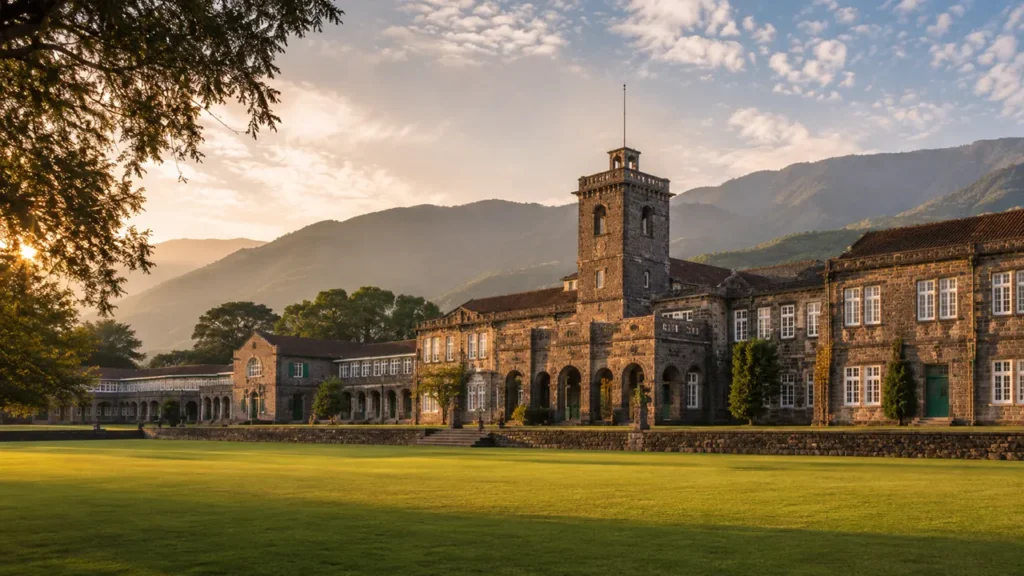
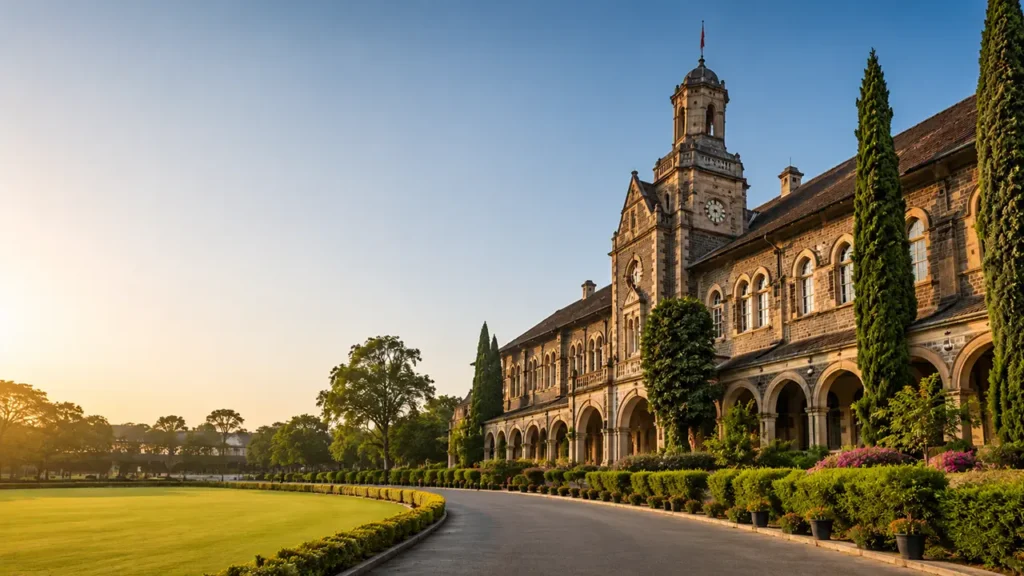
If you are searching for one of the oldest and most respected boarding schools in India, you have probably come across the name Scindia School. Located inside the historic Gwalior Fort in Madhya Pradesh, this school has a story that goes back more than 125 years. It is not just a school. It is a piece of Indian history that has shaped leaders, actors, diplomats, and business owners. In this blog, we will look at everything you need to know about Scindia School, from its beginning to its present-day facilities, admission process, fees, and more.
A Quick Look at the History of Scindia School
Scindia School was started in the year 1897. At that time, it was called the Sardar School. The school was set up by Maharaja Madho Rao Scindia of Gwalior State. His main goal was to give a modern, English-style education to the sons of royal families and noblemen who lived in and around Gwalior.
In 1908, the school moved to its present location on top of the Gwalior Fort. This fort is a very old structure, and parts of the buildings used by the school today were once British army barracks. Over time, the school also took over a military school building, and it began to run on the basis of an endowment, which means that money was set aside permanently to support its working.
A major change happened in 1933. In that year, the Regency Council of Gwalior gave the school a new name, The Scindia School, and gave it a wider purpose. Instead of only teaching children of royal and noble families, the school opened its doors to students from many other backgrounds as well. This step turned Scindia School from a school for the elite few into an institution that welcomed talented students from across the country.
Today, the school is managed by a Board of Governors. The Scindia Education Society, which was formed in 1956, looks after the running of the institution. Even after more than a century, the school continues to follow many of its old traditions while also keeping up with modern teaching methods.
Where is Scindia School Located?
The school sits on the Gwalior Fort, which is one of the most famous forts in India. This is a huge advantage for the students because they grow up surrounded by history. The fort itself has seen many important events. Soldiers of Tatya Tope fought British forces near these walls, and the brave queen Rani of Jhansi spent her final days close to this fort. Walking through the school campus, you can find a sixth-century temple with detailed stone carvings just a short distance away.
The campus is spread across a large area, with different sources mentioning figures between 100 and 160 acres. Whatever the exact number, the size gives students plenty of room for sports fields, gardens, and walking paths, all within the boundary of a protected heritage site.
Board, School Type, and Classes Offered
Scindia School is a private institution. It works under the affiliation of the Central Board of Secondary Education, which most people know as CBSE. This means that students follow the CBSE syllabus right from middle school until they finish Class XII and appear for board examinations.
The school offers classes from Class VI to Class XII. There is no primary section here. Children join either in Class VI, VII, VIII, or sometimes in Class IX and XI, depending on seat availability. It is a boys-only boarding school, so all students, no matter where they come from, stay on campus in hostels during the school term.
Inside the school, classes are divided into two main sections. Classes VI to VIII form the Junior School, and Classes IX to XII form the Senior School. Each section has its own houses, which are like smaller communities within the larger school. There are four houses for the Junior School and eight houses for the Senior School, and each house is named after a member of the Scindia royal family. This house system helps in building team spirit, friendly competition, and a sense of belonging among students.
Campus Life and Facilities at Scindia School
One of the biggest draws of Scindia School is its facilities. Because the school has been running for so long, it has had time to build a strong support system for its students. Here are some of the key facilities you will find on campus:
- Academic Blocks: The school has modern classrooms built within heritage buildings. Many of these structures date back to the colonial period, but they have been adapted to support smart teaching tools, science labs, and computer centres.
- Library: A large library gives students access to books across subjects, along with quiet spaces for reading and research.
- Sports Fields: The campus is known for having around 14 separate playing fields. Students can play cricket, football, basketball, tennis, and several other sports.
- Swimming Pool: Swimming is part of the regular activity schedule, and the school maintains a pool for training and recreation.
- Health Centre: Known as the Golden Jubilee Hospital, this on-campus medical facility has a resident doctor, nurses, and support staff who are available at all times. It includes a main patient hall with multiple beds and an air-conditioned room for special care.
- Hostels: Since this is a full boarding school, hostels are an important part of daily life. Each house has its own hostel building, supervised by house staff who look after the daily needs of students.
- Dining Hall: All students eat together in a large dining hall. The school provides vegetarian, non-vegetarian, and eggetarian food options, so families with different dietary preferences can be comfortable with the arrangement.
- Music, Art, and Cultural Spaces: Beyond academics and sports, the school supports music bands, art rooms, and cultural societies. The school’s brass band is especially well known and takes part in events like Republic Day parades.
- Amphitheatre: An open-air amphitheatre built in 1934 is still used today for cultural programmes and school gatherings.
All these facilities are placed within a setting that very few schools in the world can offer, a real working fort with centuries of history around every corner.
Discipline, Values, and Daily Routine
Scindia School puts a strong focus on discipline and personal grooming. Students are expected to follow dress codes that include polished shoes, neat hair, and no jewellery. For formal events, students wear suits or bandhgalas, which are traditional Indian formal jackets. Daily inspections are part of school life, and these are meant to build self-respect and attention to detail among the boys.
One tradition that stands out is the Astachal assembly. Every evening at sunset, the whole school gathers near a statue of Mahatma Gandhi for five minutes of complete silence. This quiet time is meant to help students reflect on their day and connect with a sense of peace, even amid a busy boarding school schedule.
Another major event on the school calendar is Founder’s Day, celebrated every year in October. This day marks the founding of the school in 1897 and usually includes morning assemblies, patriotic performances, and speeches from special guests. In recent years, the school has invited senior dignitaries, including top defence officials, to address students on this occasion.
The school’s brass band tradition is also worth mentioning. Students march in organised formations during Republic Day events and other ceremonies, which helps build discipline, teamwork, and pride in representing the country and the school.
Academic Approach and Results
Being a CBSE school, Scindia School follows the national curriculum, but it adds its own touch through experiential learning. Teachers focus not just on textbook knowledge but also on building critical thinking and problem-solving skills among students. The idea is to prepare boys who can think on their feet rather than just memorise facts for exams.
Over the years, the school has built a strong academic reputation. Students consistently perform well in CBSE board examinations, and the school is often named among the top boarding schools for boys in India. In one well-known ranking, the Education World India School Rankings named Scindia School the top boys’ residential school in the country.
Apart from academics, the school also offers career counselling services. This helps senior students understand which subjects or streams might suit their interests and strengths, especially as they prepare for college admissions or specialised entrance exams after Class XII.
Admission Process at Scindia School
Getting admission into Scindia School is a multi-step process, and parents should plan well in advance. Since the school only takes boys from Class VI onwards, admission usually happens at this entry point, though there are limited seats available later for Classes VII, VIII, IX, and XI as well.
Age Criteria
For Class VI admission, a child generally needs to be around 11 to 12 years old as on the 1st of January of the admission year. Similar age bands apply for Classes VII and VIII, with the exact range shifting up by roughly a year for each class.
Entrance Examinations
The school conducts an aptitude-based entrance test. This is called either the Common Aptitude Analysis or the Scindia Aptitude Analysis. The Common Aptitude Analysis is shared with a few partner schools, including Daly College and Mayo College, while the Scindia Aptitude Analysis is exclusive to Scindia School. A candidate can choose to appear for either test, depending on convenience and timing.
This assessment usually checks ability in Mathematics, English, and either Hindi or General Awareness. For students applying to Class XI, the assessment is held separately, usually toward the end of March, right at the Gwalior campus.
For outstation candidates, that is, students applying from cities far from Gwalior, registration deadlines for the Common Aptitude Analysis usually close by the end of September, while registrations for the Scindia Aptitude Analysis close about a week before the test date, often in late January.
Documents Required
Once a child clears the entrance process, the school asks for a set of documents to complete the admission formalities. These typically include:
- Transfer Certificate from the previous school
- Birth Certificate
- Residence Proof
- Photographs of the child and parents or guardians
- Latest marksheet or report card, if applicable
- Medical reports
- Character Certificate
- Valid Passport, where applicable
- Migration Certificate, if coming from a different education board
- Category verification certificate, if applicable
- Aadhar Card of the child and parents
- Immunization Certificate
It is always a good idea to keep both original copies and photocopies ready, since schools often ask for both during the verification stage.
Interview or Interaction Round
After the written test, shortlisted candidates and their parents are usually called for a personal interaction. This is not meant to trick or trouble students. It is simply a way for the school to understand the child’s personality, interests, and readiness for boarding life, since living away from home is a big change for any young boy.
Fee Structure
Scindia School is a premium boarding institution, and the fee structure reflects the facilities, staff, and infrastructure on offer. Based on publicly available figures, here is a general idea of what families can expect, though exact numbers should always be confirmed directly with the school since fees are revised from time to time.
- Monthly composite fee for Class VI is approximately Rs. 68,750, which is close to the average for boarding schools in Gwalior.
- The first-year total cost of a new admission, including registration fee, admission fee, security or caution money, and composite fees, can go up to around Rs. 18 lakh, depending on the class of entry.
- A one-time registration fee of around Rs. 6,000 is charged, along with a prospectus fee.
- Fees generally cover boarding, food, academics, and use of most campus facilities, though some optional activities may carry additional charges.
It is worth noting that Scindia School also runs a generous scholarship programme. The school sets aside close to one crore rupees every year for merit-based and need-based scholarships. These scholarships are open to both new applicants and current students who do well in academics, sports, or other co-curricular activities, regardless of their financial background. This shows that the school tries to remain accessible to talented students even though the regular fee structure is on the higher side.
On top of this, the school has a special arrangement with Westminster University in the United Kingdom. Through this tie-up, one or two students each year can receive up to a 100 percent scholarship for a full-time course, which includes free accommodation, an arrival allowance, a monthly stipend, and even flights to and from London. The school also has a connection with NYU Abu Dhabi for further studies.
Reviews and Reputation
When you look at reviews across different school directories, Scindia School generally scores very well, often between 4.5 and 4.7 out of 5. Parents and former students frequently mention the strong values, discipline, and leadership training the school provides. Many reviewers describe it as one of the best schools in India for shaping confident, well-rounded young men.
At the same time, some reviews point out that the school is on the expensive side, which makes it harder for middle-class families to consider it without financial aid. This is a fair point to keep in mind, though the scholarship programme mentioned earlier does help bridge this gap for some students.
Overall, the consistent theme across reviews is respect for the school’s long history, its unique fort location, and its focus on building character alongside academic performance.
Notable Alumni of Scindia School
Scindia School has produced graduates who have gone on to do remarkable things in many different fields. The school’s alumni network, often called Ex-Scindians, includes names from politics, business, defence, diplomacy, and even Bollywood.
- Jyotiraditya Scindia, a well-known political leader, is connected to the school both as an alumnus and as the current chairman of its Board of Governors.
- Rajendra S. Pawar, co-founder and chairman of NIIT Group, played a major role in spreading IT education across India, training millions of professionals over the decades.
- Shivshankar Menon, who served as India’s Foreign Secretary and later as National Security Advisor, handled some of the country’s most important international matters, including discussions on the civil nuclear deal with the United States.
- Vikram Misri, who has served as India’s Foreign Secretary in recent years, is another diplomat associated with the school.
- Several well-known names from the Indian film industry have also studied here, which has led to the school sometimes being nicknamed the Bollywood School because so many actors and filmmakers count themselves among its former students.
This wide spread of successful alumni across very different careers shows how the school’s focus on leadership and character building tends to stay with students long after they leave the fort gates.
Why Parents Consider Scindia School
There are a few clear reasons why parents, especially those connected to diplomatic, business, or defence backgrounds, often shortlist Scindia School for their sons:
- A long, proven history of more than 125 years in running a boarding school successfully.
- A unique campus setting inside a real historical fort, which gives students a sense of pride and connection to Indian heritage.
- Strong academic results within the CBSE board, supported by experienced teaching staff.
- A wide range of sports and cultural facilities that support all-round development, not just classroom learning.
- A house system and boarding structure that builds independence, teamwork, and discipline from a young age.
- A respected alumni network that can open doors in many fields later in life.
- Scholarship support for talented students who may not be able to afford the full fee on their own.
Things to Keep in Mind Before Applying
While Scindia School has a lot to offer, it is also important for parents to think through a few practical points before applying.
- This is a boys-only school, so it is not an option for families looking for a co-educational or all-girls boarding environment.
- Boarding life means the child will live away from home for most of the academic year, which can be a big adjustment, especially for boys joining straight from a day school background.
- The fee structure is on the higher end compared to many other CBSE schools, so financial planning, or applying for scholarships, becomes important.
- Entrance exams and interviews mean that admission is competitive and not guaranteed, even for strong students.
- Since the school does not provide transport services, parents need to plan how their child will travel to and from Gwalior at the start and end of each term.
Final Thoughts
Scindia School is more than just an old building on a fort. It is a school that has managed to combine more than a century of tradition with steady academic performance and modern facilities. From its early days as the Sardar School for royal families to its current identity as one of India’s most respected CBSE boarding schools, it has stayed true to its core mission of building disciplined, capable young men.
For families who can manage the fee structure, or who qualify for the scholarship support the school offers, Scindia School remains a strong option for boys entering Class VI and beyond. The mix of heritage, discipline, sports, and academics makes it a school that continues to attract attention from across India and abroad, even after more than 125 years of history.
As always, before making a final decision, parents are encouraged to visit the school website, speak directly with the admissions office, and if possible, visit the Gwalior Fort campus in person to get a true feel of what daily life is like for a Scindian.
A Typical Day in the Life of a Scindian
Many parents who are new to the idea of boarding school often wonder what an ordinary day looks like for a student at Scindia School. While the exact schedule can shift a little depending on the season and the academic calendar, the general structure of the day tends to stay fairly consistent across the year.
Mornings usually begin early, well before the sun is fully up. Boarding students are expected to get ready quickly, follow a short physical training or assembly session, and then move on to breakfast in the common dining hall. After breakfast, the school day shifts into regular academic periods, much like any other CBSE school, though the surroundings here happen to be centuries-old fort walls rather than a modern school building.
Afternoons are usually reserved for a mix of classroom learning and supervised study time. Senior students preparing for board examinations often get extra guidance from subject teachers during this period. Once the main academic hours are done, the focus shifts to sports and extracurricular activities. Given that the campus has so many playing fields, it is common for different houses to be busy with practice matches, athletics training, or swimming sessions almost every evening.
As the sun begins to set, the school pauses for the Astachal assembly, the quiet five-minute gathering near the Gandhi statue that has already been mentioned earlier in this article. This moment of silence is often described by alumni as one of the most memorable parts of their time at the school, since it offers a calm break in an otherwise busy boarding school routine.
Evenings continue with dinner in the dining hall, followed by prep time, where students complete homework and revise lessons under the supervision of house staff. Lights out and bedtime routines are managed carefully to make sure that growing boys get enough rest before another full day begins.
Weekends tend to be a little more relaxed, with time set aside for hobby clubs, music practice, inter-house competitions, and sometimes outings or special events connected to Founder’s Day or other school traditions. This balance between structure and free time is part of what helps students develop both independence and self-discipline during their years at the school.
Sports and Co-Curricular Activities
Sports form a central part of life at Scindia School. With so many playing fields available, students get the chance to try out and specialise in multiple sports rather than being limited to just one or two options. Cricket and football remain extremely popular, with regular inter-house tournaments that create a strong sense of competition and team spirit.
Apart from team sports, the school also supports individual disciplines such as athletics, swimming, and tennis. Physical fitness is treated as an important part of a well-rounded education here, not just an extra activity squeezed in after academics.
Beyond sports, the co-curricular calendar at Scindia School includes music, art, debate, and various clubs and societies. The school’s brass band, mentioned earlier, is a major point of pride and regularly performs at important school functions and national celebrations like Republic Day. Many students who join the band carry forward a love for music long after they leave school.
Debating and public speaking are also encouraged, helping students build confidence in expressing their views clearly. Since the school produces so many alumni who go on to work in diplomacy, business leadership, and public life, this early exposure to structured communication and argument likely plays a meaningful role in shaping those future careers.
The school is also a member of well-known educational networks such as the Round Square Group and the Indian Public Schools Conference. Being part of these networks gives students the chance to interact with peers from other leading schools across India and sometimes internationally, through exchange programmes, joint events, and shared academic standards.
International Exposure and Higher Education Pathways
One feature that sets Scindia School apart from many other boarding schools in India is its international academic connections. As mentioned earlier, the school has a long-standing arrangement with Westminster University in the United Kingdom, through which a small number of outstanding students can receive scholarships covering tuition, accommodation, a monthly stipend, and even flights between India and London.
There is also a professional connection with NYU Abu Dhabi, opening up further possibilities for Scindia School graduates who wish to pursue higher education outside India. These tie-ups reflect the school’s effort to prepare students not just for CBSE board examinations, but for a wider world of opportunities once they finish Class XII.
For students who choose to stay within India for their undergraduate studies, the career counselling support offered in the senior years helps them understand entrance examinations, college options, and subject choices that match their interests and strengths. This guidance becomes especially useful for students aiming for competitive fields such as engineering, medicine, law, or the armed forces, given the school’s historical links with defence families.
How Scindia School Compares to Other Top Boarding Schools in India
India has a handful of well-known boarding schools, and families researching Scindia School often want to know how it stands next to names like Daly College, Mayo College, or other heritage institutions. While each school has its own personality, there are a few points that set Scindia School apart.
First, the location is genuinely unique. Very few schools anywhere in the world operate inside a working historical fort. This gives students a daily reminder of Indian history that classroom lessons alone cannot fully provide. Second, the shared entrance examination system, the Common Aptitude Analysis, connects Scindia School with a small group of similarly respected institutions, which tells you something about how the school is viewed within this circle of heritage boarding schools.
Third, the strength of the alumni network gives Scindia School an edge in terms of long-term value. While many good schools produce successful graduates, the spread of Ex-Scindians across politics, diplomacy, business, and entertainment is fairly wide for a single all-boys institution. This kind of alumni community can open doors later in life, whether through mentorship, networking, or simply shared school memories that create an instant connection between strangers who later discover they both studied at the same fort.
That said, families should remember that a good fit depends on the individual child. Some boys thrive in a highly structured, disciplined boarding environment with strong traditions, while others may find a more flexible day-school setting easier to adjust to. It is worth speaking with the school directly, and if possible, with current parents or alumni, before making a final choice.
Tips for Parents Preparing Their Child for Scindia School
If you are seriously considering Scindia School for your son, a little preparation in advance can make the transition to boarding life much smoother. Here are some practical suggestions that many parents find useful.
- Start talking to your child about boarding school life well before the entrance exam, so the idea does not feel sudden or frightening.
- Practice basic self-care skills at home, such as keeping a room tidy, managing daily routines, and taking care of personal belongings, since hostel life expects a fair amount of independence.
- Help your child build a habit of reading and general awareness, since the entrance test often checks comprehension and awareness alongside Mathematics and language skills.
- Encourage participation in at least one sport or physical activity before joining, so your child feels more comfortable when sports become a daily part of school life.
- Keep all required documents, such as birth certificates, transfer certificates, and Aadhar cards, organised well in advance of the admission deadlines.
- If finances are a concern, research the scholarship process early and speak with the admissions office about eligibility, rather than assuming it is out of reach.
School Directory Information
Here is a quick summary table with the key details about Scindia School for easy reference.
| School Name | The Scindia School |
| Establishment Year | 1897 (founded as the Sardar School; renamed The Scindia School in 1933) |
| Board | CBSE (Central Board of Secondary Education) |
| School Type | Private, Residential (Boarding School) |
| Classes Offered | Class VI to Class XII |
| Address | Gwalior Fort, Gwalior, Madhya Pradesh, India – 474008 |
| Contact Number | 0751-2480750 |
| Email ID | office@scindia.edu |
| Website | www.scindia.edu |
| Principal Name | Dr. Madhav Deo Saraswat (Principal, as per latest available records; parents should confirm current details with the school) |
| Student Strength | Several hundred boarding students across Classes VI to XII |
| Facilities | Heritage campus inside Gwalior Fort, smart classrooms, science and computer labs, library, 14 playing fields, swimming pool, health centre (Golden Jubilee Hospital), hostels, dining hall, music and art rooms |
| Admission Process | Entrance test (Common Aptitude Analysis or Scindia Aptitude Analysis), followed by interaction/interview |
| Fee Structure | Monthly composite fee is approximately Rs. 68,750 for Class VI (boarding); first-year cost including one-time charges can go up to around Rs. 18 lakh, depending on class. Fees may change every year, so please confirm with the school |
| Reviews & Ratings | Around 4.5 to 4.7 out of 5 on most school directory and review platforms |
| Alumni Information | Notable alumni include Jyotiraditya Scindia, Rajendra S. Pawar (Co-founder, NIIT), Shivshankar Menon (former Foreign Secretary of India), and several names from Bollywood and Indian sports and business |
Frequently Asked Questions
- When was Scindia School established?
Scindia School was established in 1897 as the Sardar School and was renamed The Scindia School in 1933.
- Is Scindia School a co-educational school?
No, Scindia School is a boys-only residential school. It does not admit girls.
- Which classes does Scindia School offer?
The school offers education from Class VI to Class XII, divided into Junior School and Senior School sections.
- Which board is Scindia School affiliated with?
Scindia School is affiliated with the Central Board of Secondary Education, commonly known as CBSE.
- Where is Scindia School located?
The school is located on the historic Gwalior Fort in Gwalior, Madhya Pradesh, India.
- What is the admission process for Scindia School?
Admission requires clearing an entrance test, either the Common Aptitude Analysis or the Scindia Aptitude Analysis, followed by a personal interaction for shortlisted candidates.
- Does Scindia School provide transport facilities?
No, the school does not offer transport services. Parents are responsible for travel arrangements at the start and end of each term.
- What is the approximate fee for Class VI at Scindia School?
The monthly composite fee for Class VI is approximately Rs. 68,750, though the first-year total cost, including one-time charges, can be significantly higher. Parents should confirm current fees directly with the school.
- Does Scindia School offer scholarships?
Yes, the school sets aside close to one crore rupees every year for merit-based and need-based scholarships for both new and existing students.
- Who are some notable alumni of Scindia School?
Notable alumni include Jyotiraditya Scindia, Rajendra S. Pawar of NIIT, former Foreign Secretary Shivshankar Menon, and several well-known names from the Indian film industry.
- Does the school have boarding facilities for all students?
Yes, Scindia School is a full boarding school, and all students live in campus hostels organised under the house system.
- What type of food is served at Scindia School?
The school provides vegetarian, non-vegetarian, and eggetarian meal options to suit different dietary preferences.

StudentsTalk.in, is an education-focused platform dedicated to helping students stay informed about the latest academic updates, scholarships, entrance exams, career opportunities, government schemes, and study resources. With a passion for education and student success, she creates informative, easy-to-understand content.